


April 27- May 3, Come Follow Me, Youth lesson helps, Sunday School
Updated: Apr 17
Hello Friends!
Here are the free prints and ideas for this week:
You can read about them and print them in the lesson plan below.


Here is this week's purchasable lesson. You can click the image to go to Etsy. You can also read about it in the lesson plan below.

This gift tag is already included in the lesson bundle, but if you would like to purchase it separately, click the image below.


This is a Free idea. You probably won't have time to do both the purchasable lesson and this.
Create stations (or just lay items out in order):
Have the youth physically walk through it!
🔥 Altar of Sacrifice
Object idea: small rock, paper labeled “sins,” or something to “give up.”
Teach: We start by giving up sin and turning to God
Mini action: Have them write something they want to improve and “leave it” there
💧 Laver (Cleansing)
Object idea: bowl of water or hand sanitizer
Teach: We need to be cleansed through repentance and Christ
Mini action: Let them symbolically wash their hands.
🕯️ Lamp-stand (Light)
Object idea: candle or flashlight. Try to make this the only light in the room.
Teach: Christ gives us light and direction
🌫️ Altar of Incense (Prayer)
Object idea: picture of smoke rising, or just hands folded
Teach: Prayer helps us connect to God daily
Mini action: Pause for a quiet moment.
✨ Ark of the Covenant (Presence of God)
Object idea: glowing light, gold box, or just a special space
Teach: This represents being in God’s presence
💡 Emphasize:
This is where we’re trying to go in life
God wants us to return to Him
After this setup, they may have a better time understanding and studying the scriptures.
Other than a free worksheet at the bottom, everything else is in my store.
The Lord wants me to become holy.
Exodus 35–40 describes the Israelites’ efforts to build a tabernacle, where sacred ordinances would help them become a holy people. As you read these chapters, look for the things the Lord asked His people to place in the tabernacle. What might these items represent? What do they suggest to you about increasing in holiness? Especially consider how these items turn your thoughts toward the Savior. A table like this might help you:
This can still be a fun lesson, don't worry (:
Start with the first column like this. The sacred objects are in weird shapes because they will be used to complete a puzzle later.
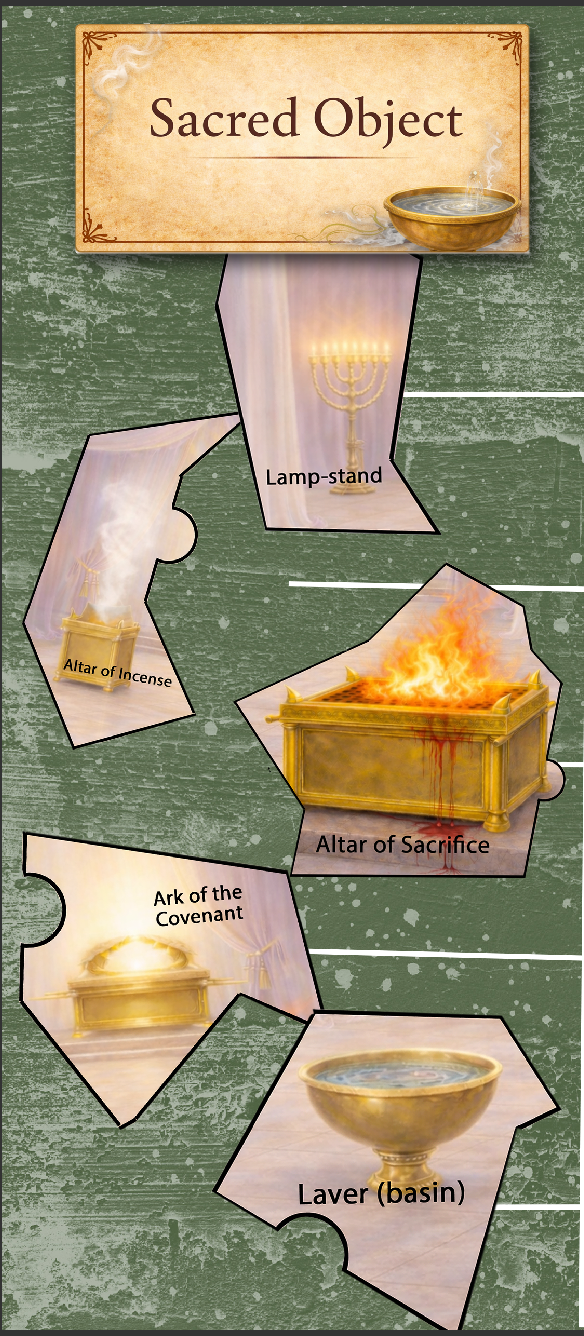
You will hand them cards to look up scriptures (put students in groups if you have more than 5). From the descriptions of the scriptures, they will match the cards to the pictures. But first, have them read some of the scripture to the class or summarize it. Then make their match.
It will look like this, when they guess correctly:

Ok, next column.
Before doing anything else, I would straight up ask the youth what they think each object represents. You can even write down some of their answers in that column. My guess is that the light, the blood, and the water will be easy, because they are similar to the sacrament and Jesus is the light. The others might be harder.

Then let them pick out of a bag cards like this:
You, the teacher, can decide, based on your time, how many questions you would like the students to answer. If it's just one student, let them pick one question to answer. Or if they are working in a group, assign each person their own question to answer.

When they have correctly chosen what it represents, they can open it and read it to the class. You might want to paper clip them closed.
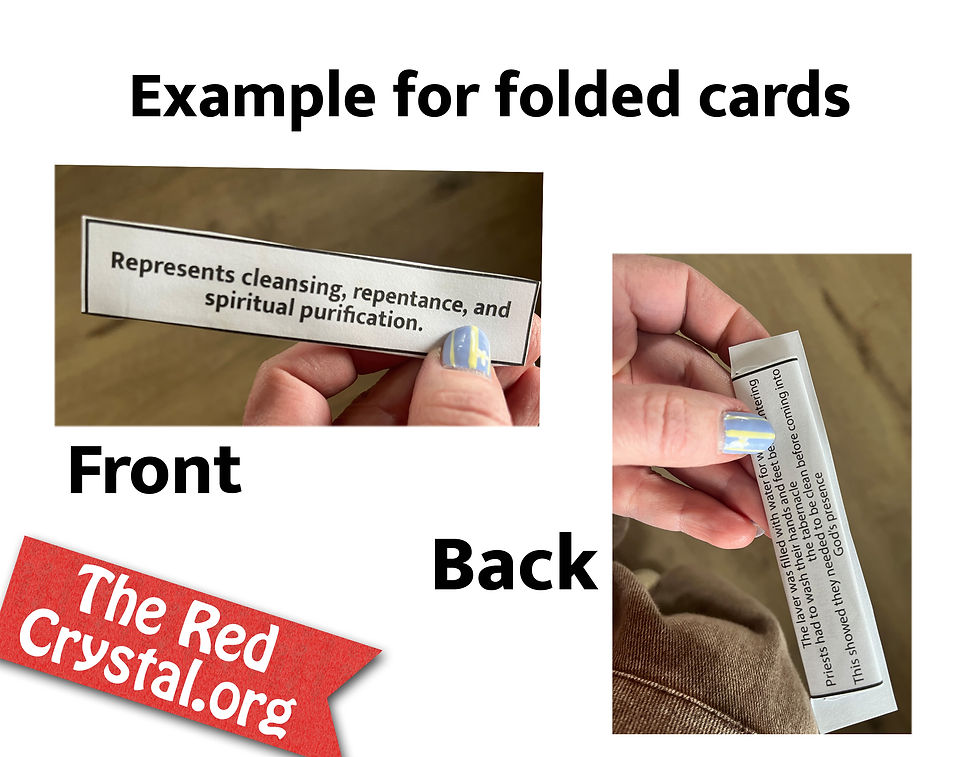
It will look like this: when completed correctly:

But you aren't done yet!
Remove the puzzle pieces from the chalkboard and give them the other puzzle pieces so they can complete the puzzle. (I would tape the puzzle together so you can look at it together without worries of messing it up.) This will also give them more insight. The placement of these objects in the tabernacle also carries significant meaning.
It will look like this:

Ask questions like, " Why do you think we need to repent first before going on the rest of the journey through the tabernacle?" "Why is the ark of the covenant hidden behind the curtains?" And other questions about the placement of sacred objects.
I have notes and questions recorded for you to help with this.
Of course, simply being in holy places doesn’t make us holy. Leviticus 19 describes laws and commandments the Lord gave to help the Israelites increase in holiness. What do you find in these commandments that could help you seek holiness from the Lord? What do you feel impressed to do to more fully live these principles?

See also Henry B. Eyring, “Holiness and the Plan of Happiness,” Liahona, Nov. 2019, 100–103; “The Tabernacle” (video), Gospel Library.


Comments